
Application
Voltage Stabilizer for Workshops and Commercial Loads
Workshops, agro-processing lines, laboratories and large household loads share one problem: the supply moves further than the equipment tolerates. It is the widest brief we get, and the answer is usually decided by the input window rather than by the capacity.
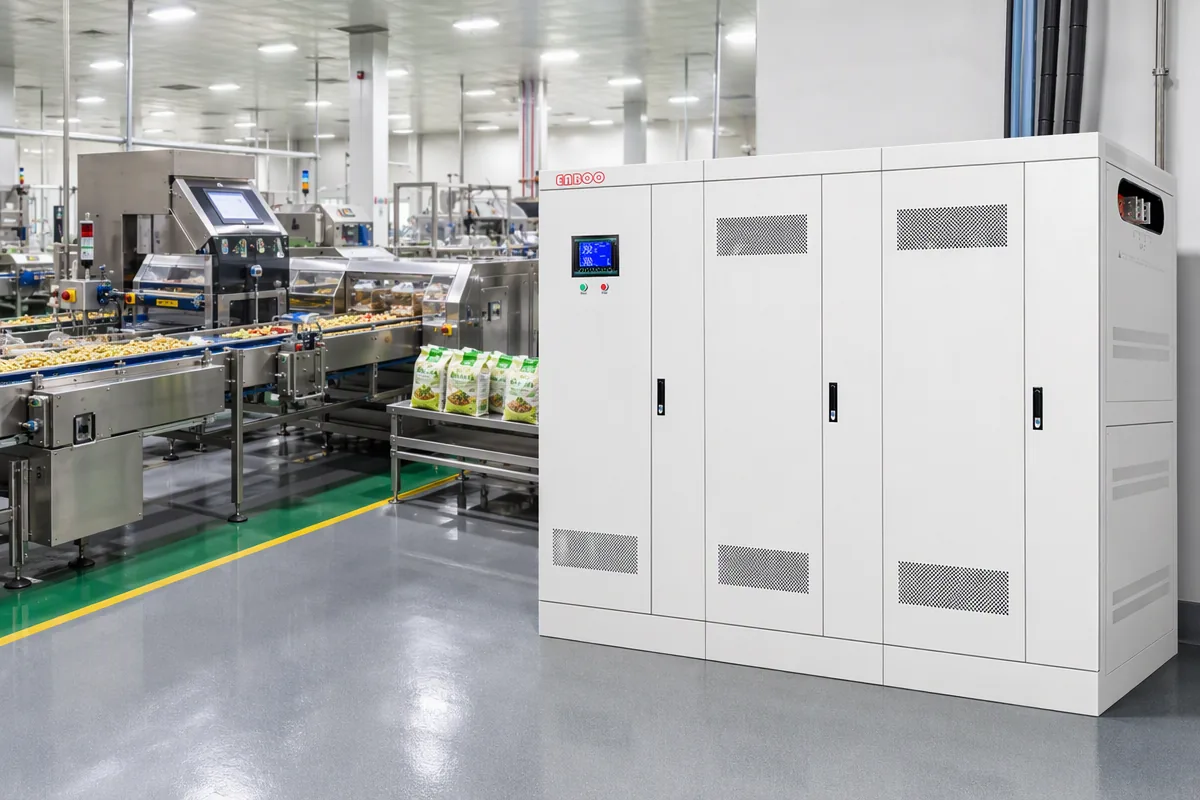
What the load actually looks like
Two sites with the same load can need different units. One sits at 210V and dips to 190V; the other sits at 235V and sags to 85V every evening. The first needs accuracy; the second needs a wide window, and extra kVA will not substitute for it.
Single-phase household and small commercial loads start at 500VA, three-phase workshop and processing loads at 10KVA, and the range runs to 3500KVA. All units are 50 or 60Hz, and the input window can be widened to a custom build from 45V.
What to specify
- Measured voltage at the point of use, no-load and loaded, not at the transformer.
- Whether the drop follows the load (a line problem) or arrives on its own (a supply problem).
- Single-phase or three-phase, and whether a neutral is present.
- Standard socket, panel language and carton if the units ship under your own brand.
Two mistakes we see
- Buying more kVA to solve a low-voltage problem: capacity does not widen the input window.
- Measuring at the panel and specifying for the socket, when the difference between the two is the building’s own wiring.
Frequently asked questions
One unit for a whole workshop, or one per machine?
One unit at the distribution board is cheaper and covers everything downstream. Per-machine units make sense when a single machine is critical, or when the board also feeds welding and other collapsing loads.
What if the voltage drops below 80V?
Standard windows end at 80V or 100V. Below that the unit has to be built to a custom window from 45V, with soft start, so that the load does not re-create the collapse on every restart.