
How to Select a High-Power Compensated Stabilizer
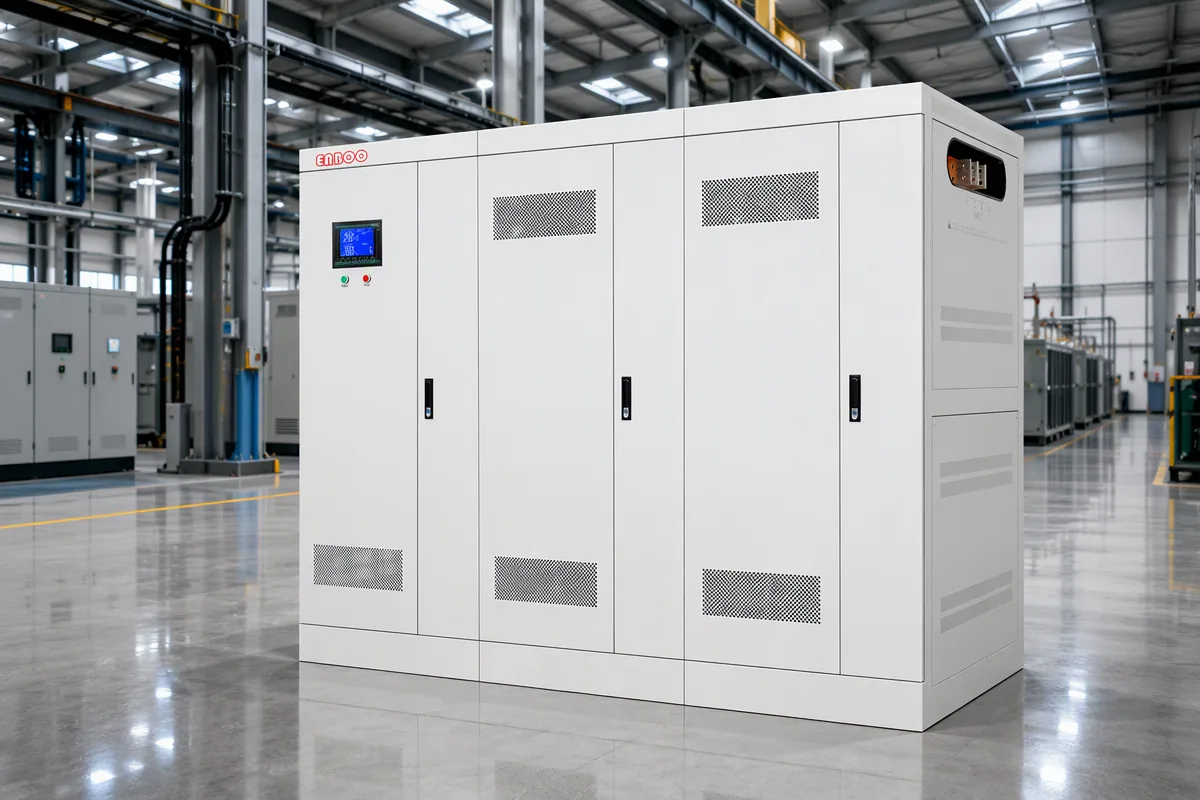
Voltage instability in factories, data centers, rail transit, hospitals, port terminals and large commercial buildings is rarely just a minor rise or drop in voltage. Large motor startup, concentrated welding operations, frequent adjustment of variable-frequency drives, long-distance power supply and rapid load variations can trigger sustained voltage deviation, instantaneous dips and repeated fluctuations. These facilities need stabilizers that track dynamic load changes, withstand heavy current and run continuously for long periods. When input voltage drifts, the compensated stabilizer uses its compensation circuit to superimpose or offset voltage on the main circuit and maintain stable output.
What Is a High-Power Compensated Voltage Stabilizer
A high-power compensated voltage stabilizer is an automatic voltage regulation unit built for industrial and large power systems. Its core components include a compensation transformer, voltage regulation mechanism, detection and control unit, bypass circuit, protection devices and power cabinets. It continuously samples input voltage, output voltage and load current. The controller calculates voltage deviation, confirms compensation direction and drives the regulator to adjust the compensation voltage.
Different from stabilizers relying entirely on transformer ratio adjustment, this compensated topology only compensates the variable voltage part instead of passing full load power through regulating components. Proper design balances capacity, efficiency, wide voltage range and running cost. Important note: it cannot fix all power quality problems. It mainly handles overvoltage, undervoltage and moderate voltage fluctuations. Frequency drift, severe harmonics, deep voltage sags and blackouts require extra filters, DVR, UPS or energy storage systems.
Operating Logic
The stabilizer works in four closed-loop stages: detection, judgment, regulation and protection. Sampling modules monitor three-phase voltage, current and operating status; premium projects also track power factor, harmonics, unbalance and temperature. The controller compares real-time data with preset thresholds to identify faults or deviation, then adjusts compensation taps. Once output voltage enters the target range, regulation stops to avoid frequent action. Protection functions cover overcurrent, short circuit, overvoltage, undervoltage, phase loss and overtemperature; the unit will alarm, cut output or switch to bypass to stop fault spreading.
Typical Application Scenarios
It suits large production lines with CNC machines, compressors and injection moulding machines, where motor inrush current causes bus voltage sag. It also fits water plants, sewage plants and fire pump stations with frequent motor start-stop. For data centers and telecommunication rooms, it optimizes incoming power but cannot replace UPS; use the scheme “stabilizer + UPS + distribution protection”. Medical imaging, lab and precision testing instruments demand stable voltage, clean waveform and reliable bypass transfer. Port shore power, airports and commercial complexes with mixed motor and rectifier loads need coordinated design with switchgear, metering and fire interlock systems.
Core Selection Parameters
Rated capacity is marked in kVA. Do not simply sum all installed power. Formula: Stabilizer Capacity ≥ (Max Simultaneous Active Power ÷ Overall Power Factor) × Load Coefficient × Capacity Margin Reserve margin for motor starting surge and future expansion. Match the input voltage range with site measured peak and valley voltage. Confirm automatic and maintenance bypass with electrical & mechanical interlock to prevent accidental parallel connection. Clarify three-phase three/four-wire and earthing requirements; unbalanced loads need independent per-phase regulation.
Comparison with Other Power Equipment
Compensated stabilizers excel at continuous heavy-load voltage correction. Contact regulators are low-cost yet limited by tap speed and contact life. Solid-state electronic stabilizers respond faster but require strict heat dissipation. UPS supplies backup power for outages with higher battery maintenance costs. When comparing suppliers, focus on compensation range, overload capability, bypass logic, waveform quality, efficiency and after-sales service rather than only price or accuracy.
Installation Checklist & Vendor Validation
Reserve cooling and maintenance space, select cables based on current, distance and short-circuit rating. Outdoor units need rain, salt-spray and condensation protection. Before commissioning, test phase sequence, earthing, insulation and bypass interlock. A reliable supplier will submit datasheets, single-line diagrams, test reports, component specifications, protection settings and spare parts plans, instead of only offering a simple quotation. Site load and voltage survey always comes before configuration.
FAQ
Can it solve power outages? No. It stabilizes voltage instead of providing backup power. Is bigger capacity always better? No. Oversizing increases idle loss and investment; undersizing triggers frequent tripping. It works with unbalanced three-phase loads only if per-phase regulation is supported.
Conclusion
High-power compensated voltage stabilizers secure stable power for critical industrial and commercial loads under unstable grid conditions. Successful deployment relies on on-site power quality testing, correct capacity calculation and matched bypass & protection design. Properly selected units reduce equipment failure and protect high-value production and IT assets.
Selection · Industrial