
Injection Molding and CNC Voltage Stabilizer Sizing
The hardest hour is not the busiest one
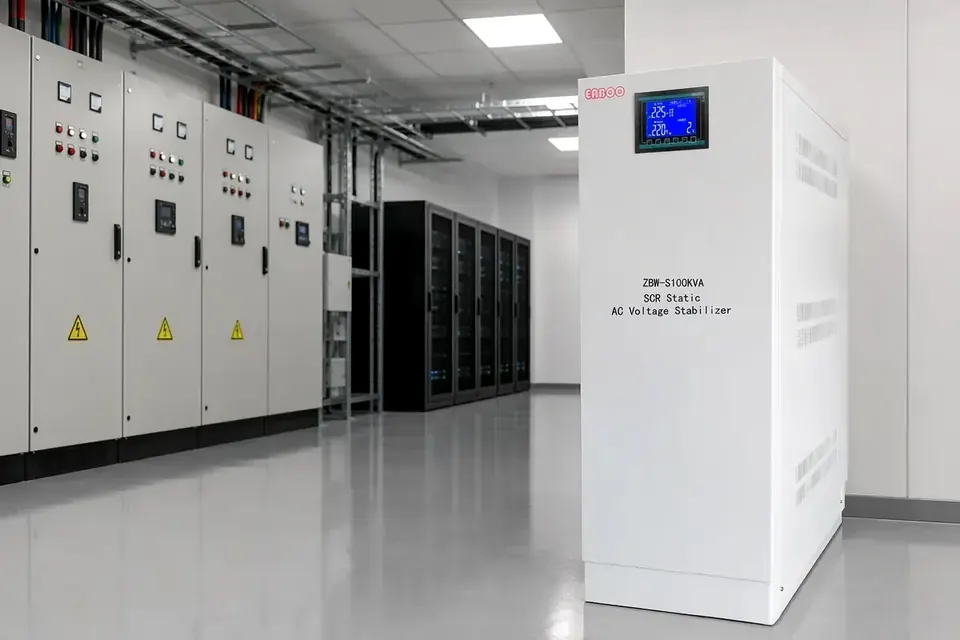
Twenty injection molding machines and six vertical machining centers share one 630 kVA transformer with an office block. At 06:50 the board meter reads 402 V. At 07:02, when the barrel heaters close their thermostats within the same minute, it reads 381 V for forty seconds and a controller reboots. At 14:20 a machining center ends a cycle, the spindle brakes from 12,000 rpm, the same meter reads 421 V for half a second, and the next machine's drive trips on DC bus overvoltage. Two opposite events on one board.
Three events, three time scales
Cold start is a resistive step. Heater bands have no inrush; thermostats close when a zone is cold, so twenty machines at 8 kW present about 160 kW in one step at close to unity power factor, before a motor turns. The dip lasts thirty to sixty seconds, until the zones reach temperature.
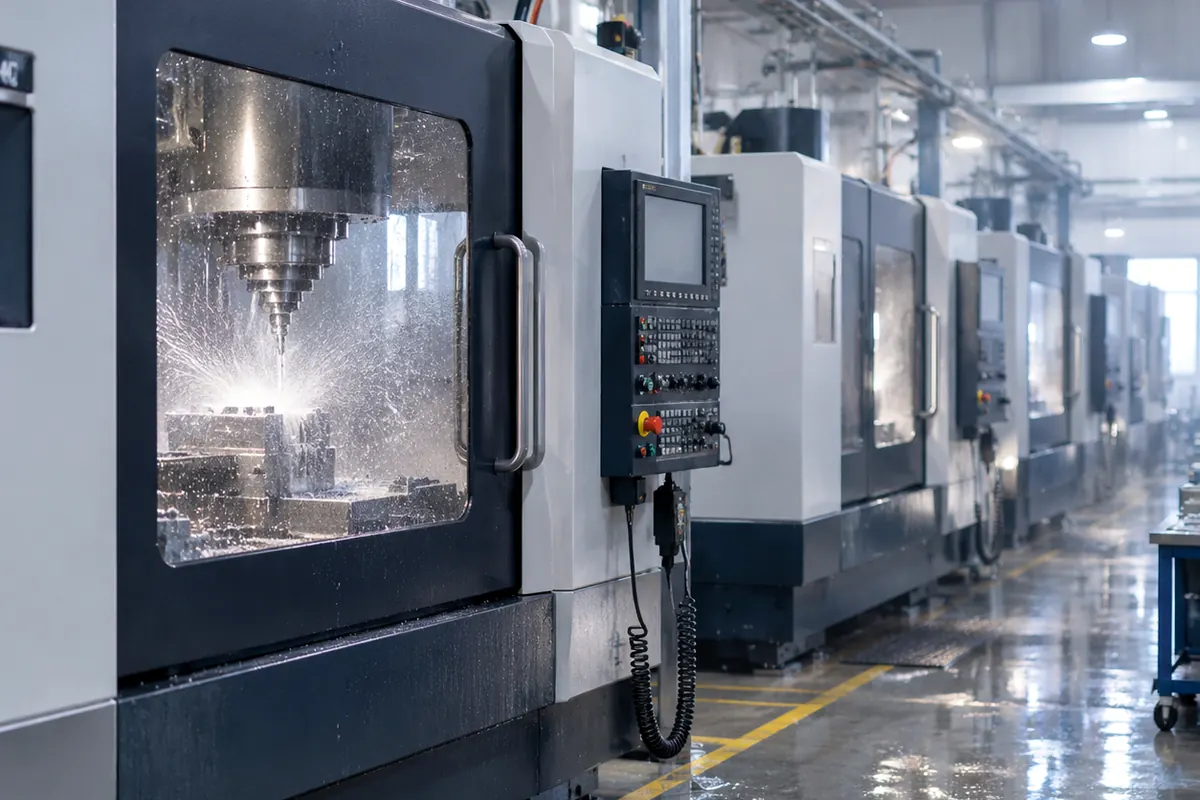
A spindle accelerating is a motor start in miniature, repeated all day: two to three times running current for 0.3 to 1 second per ramp, dozens of times an hour.
A spindle braking is a generator. Kinetic energy is half the inertia times the square of speed: 0.02 kg·m² at 12,000 rpm is 15.8 kJ, so half a second of braking returns about 31 kW to the DC link. A brake resistor turns it into heat; a regenerative setting puts it back on the AC side, and twelve machines finishing together push 200 to 300 kW into a board sized for consumption, lifting the voltage.
Underneath sits imbalance. Heater bands and dryers are single-phase, split by whoever wired the panel; a 10 to 20 percent spread between phase currents is ordinary, and a regulator moving all phases together passes it through.
What to log before choosing anything
Three channels: 10-cycle RMS for switching and braking, 1-second RMS for starts and heater steps, 10-minute averages for the utility. Under 20 milliseconds is regeneration; 0.2 to 3 seconds a motor or spindle; thirty to ninety seconds a heater bank; flat across hours a tap problem, where no stabilizer is the purchase.
Convert to volts: 200 kW at 400 V is 289 A, and a 630 kVA transformer at 4 percent plus 120 m of 70 mm² copper is about 0.06 ohm, so the terminals see the 17 V that shows on the meter. Read the other way, twelve machines at 25 kW return 433 A, or 26 V of rise.
Four fixes, cheapest first
Separate and rebalance. Own feeder for the CNC branch, heater bands spread across phases, no shared transformer. Wiring work, cheaper than any cabinet.
Regulate at the shop board. The SBW power stabilizer covers 50 kVA to 800 kVA at AC 304-456 V and holds 380 V within plus or minus 3 percent. It tracks a forty-second heater step, and cannot touch a 500 millisecond regenerative spike.
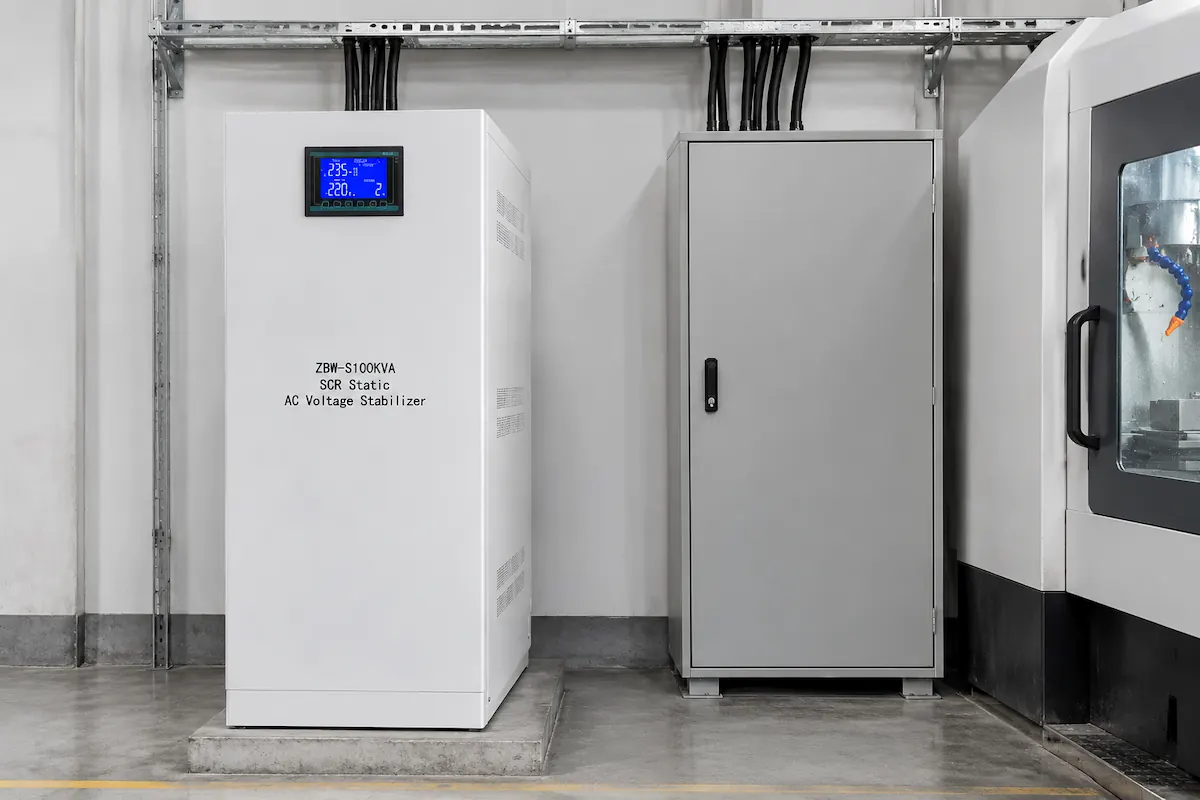
Regulate the CNC branch statically. A ZBW-S static stabilizer covers 10 kVA to 3500 kVA at AC 304-456 V with per-phase regulation, settable thresholds, millisecond correction and seamless bypass, at a fraction of the shop capacity on that branch.
Fix the regeneration where it is made. A DC bus fault on braking belongs to the drive: brake resistor sized against real inertia, a commissioned regenerative unit, or a common DC bus. A series stabilizer does not absorb that energy. Where single-phase heaters have split the phases, the SBW-F split-phase stabilizer holds each one separately, 60 kVA to 800 kVA.
Where each answer stops
No storage: below its window or beyond short-time overload it bypasses, and a regenerative rise trips it as it trips the drive. No harmonic removal: filters belong at the load. No rebalancing: per-phase regulation holds voltage, not current. And 500 kVA at 95 percent efficiency puts about 25 kW of heat into the hall.
Conclusion
Log the event before specifying. A forty-second cold-start step takes a servo unit at the incoming board; sub-second ramps, simultaneous braking and phase spread take a static per-phase unit on the CNC branch; a DC bus fault takes a resistor and a drive setting. Related arithmetic sits under power for manufacturing; capacity for one machine is in sizing from nameplate data.
Selection · Industrial · Three-phase