
Inverter Overvoltage Trip: Why PV Trips at Midday
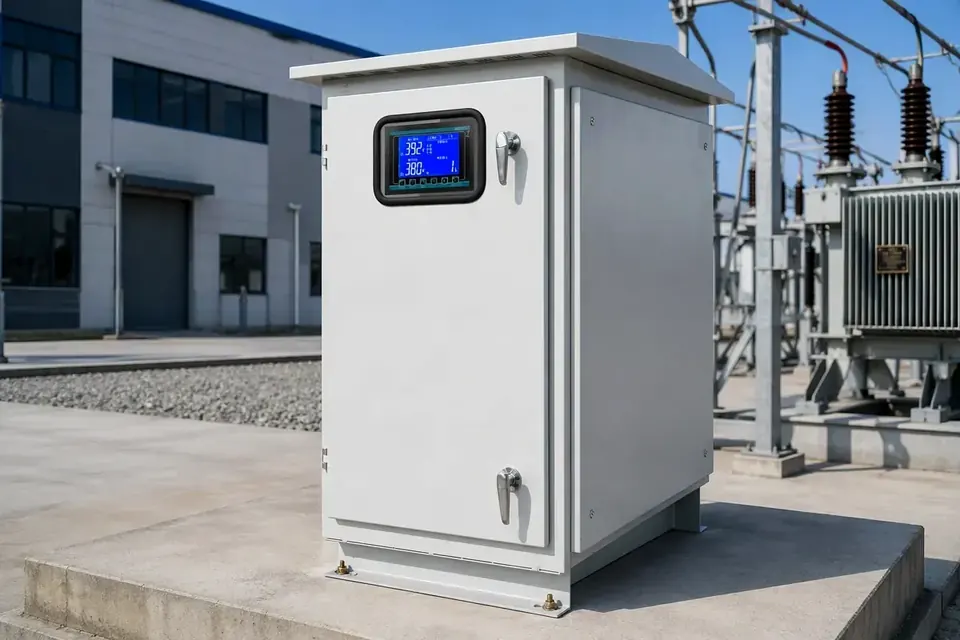
The trip that only happens at noon A 120 kW rooftop array, three string inverters on one feeder. Between eleven and two they log grid overvoltage, drop offline for five minutes, reconnect, trip again. The utility recording at the metering point reads 405V to 408V on a 400V supply, within limits. Both readings are right: they sit at two points on a circuit carrying current between them.
Terminal voltage is not grid voltage An inverter measures its own AC terminals, not the utility: the end of a cable, behind a breaker, downstream of a transformer. Push current I through loop impedance Z and the terminals sit at the transformer secondary voltage plus I times Z. On a 400V feeder with 0.12 ohm of loop, 43A adds 5V; 100A adds 12V.
So an array exporting into 405V reads 412V to 415V at its own terminals, and the relay does what it was told.
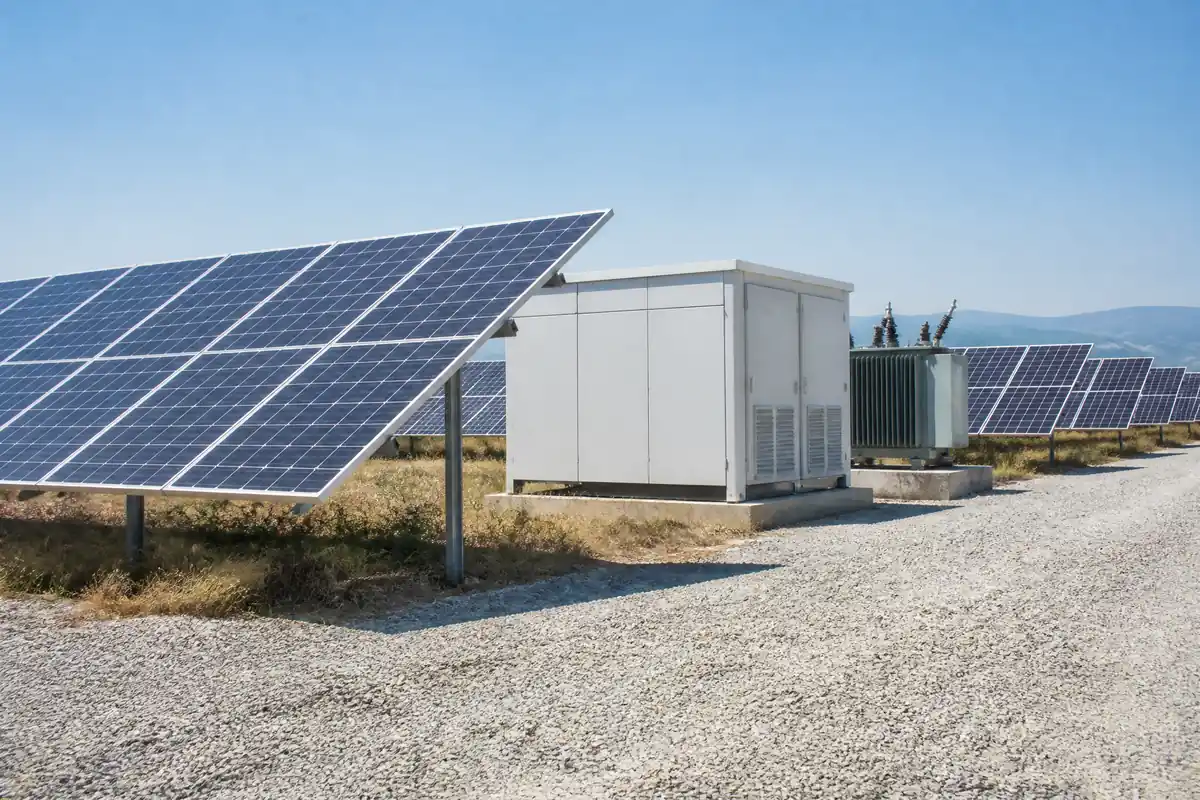
A stabilizer upstream adds the second source: holding 380V at plus three per cent means 391V, leaving an inverter limited to 110 per cent of nominal very little room.
Numbers to take before ordering anything Measure both ends at once. Metering point and inverter terminals at noon, then at night with the array off. The daytime gap is the export-driven rise; the night reading is what the grid delivers.
Convert the setting into volts. Typical limits are 110 per cent of nominal for ten minutes and 115 per cent for a shorter window: 253V and 264V phase to neutral on 230V, 440V and 459V phase to phase on 400V. Check the local code, not another market's datasheet.
Compute the rise you add. Export current times loop impedance. A 30 kW export at 400V is 43A; 100 metres of 25 square millimetre copper is near 0.07 ohm per conductor, so a 0.14 ohm loop lifts the terminals by 6V.
Separate the causes. Night above 410V means the supply is high; 400V at night and 420V at noon means the site is.
Three fixes, in order of cost Drop the set point first. A cabinet holding 380V at plus three per cent holds 391V. Ask for nominal, or two per cent under, and the same unit hands the array eleven volts free. The SBW compensated three-phase stabilizer regulates both ways across AC 304V to 456V, so bucking a high supply is routine.
Cut the impedance. Shorten the run or go up a conductor size: the rise is removed rather than hidden, and line loss falls with it.
Regulate where the array connects. On an outdoor pad, a weatherproof cabinet such as the SBW-H outdoor three-phase stabilizer stands at the array, holding the terminals at nominal while the utility side stays put.
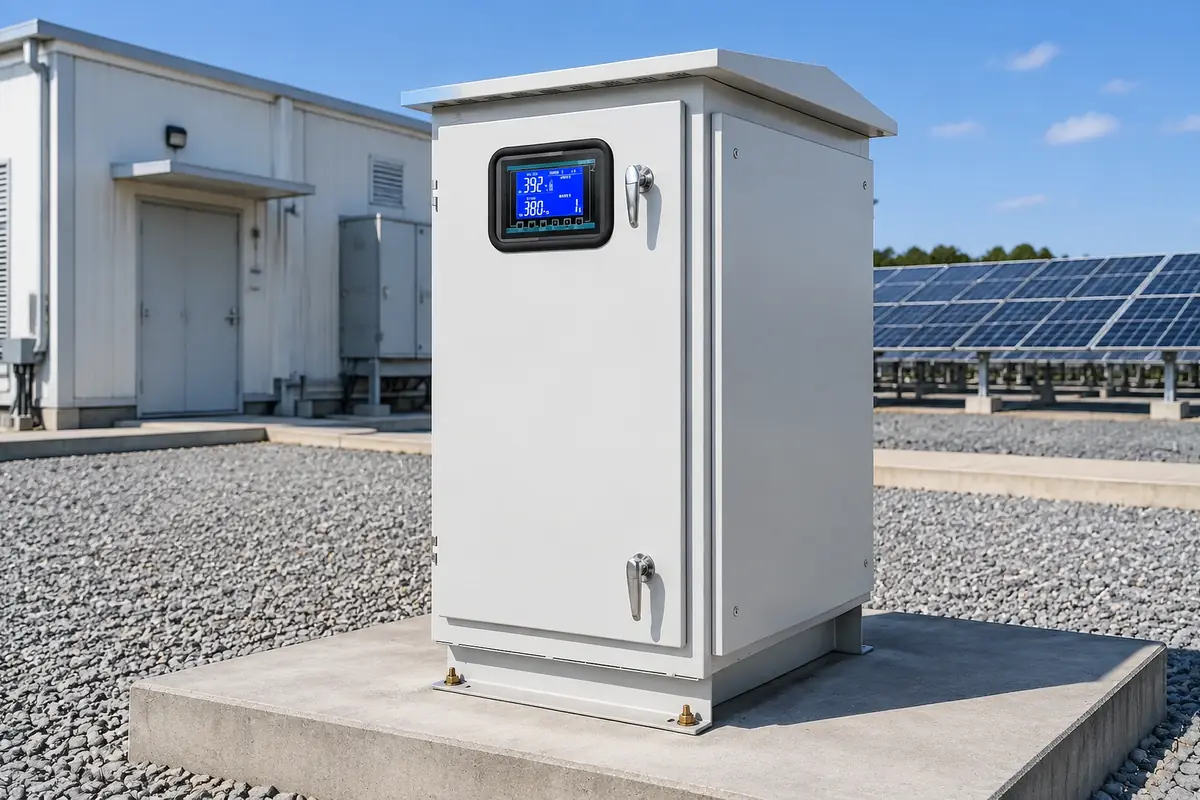
Where this reasoning stops A stabilizer regulates only what is downstream. An inverter on the utility side of the cabinet sees no change at all.
A supply that is high at night belongs to the utility, a tap change, or a dedicated step-down transformer; a stabilizer can hold load at 380V but cannot change the utility recording.
Widening the protection thresholds is not a repair: those settings disconnect the array from a live network, and relaxing them leaves the site one fault from worse.
Servo correction is mechanical: a brush at fixed speed lags the seconds-fast step of a cloud edge, so fast export swings are answered by impedance, not a faster regulator.
Nor does a stabilizer replace three-phase balance: one phase at 90A against 30A shifts the neutral and lifts one phase, as covered in three-phase faults a single-phase stabilizer cannot fix.
Conclusion A midday overvoltage trip is a measurement taken at the wrong end of a cable. Read at night first: a supply that is high there needs a tap change or a dedicated transformer. If it is normal and the terminals are high, lower the set point, cut the impedance, and regulate at the array; storage charging at midday helps where it exists. Capacity follows the load arithmetic in how to size a voltage stabilizer from nameplate data; mixed industrial loads sit under automation and machining.
Technology · Three-phase · Industrial