
Phase Imbalance: ZBW-S Per-Phase or Rebalance Loads
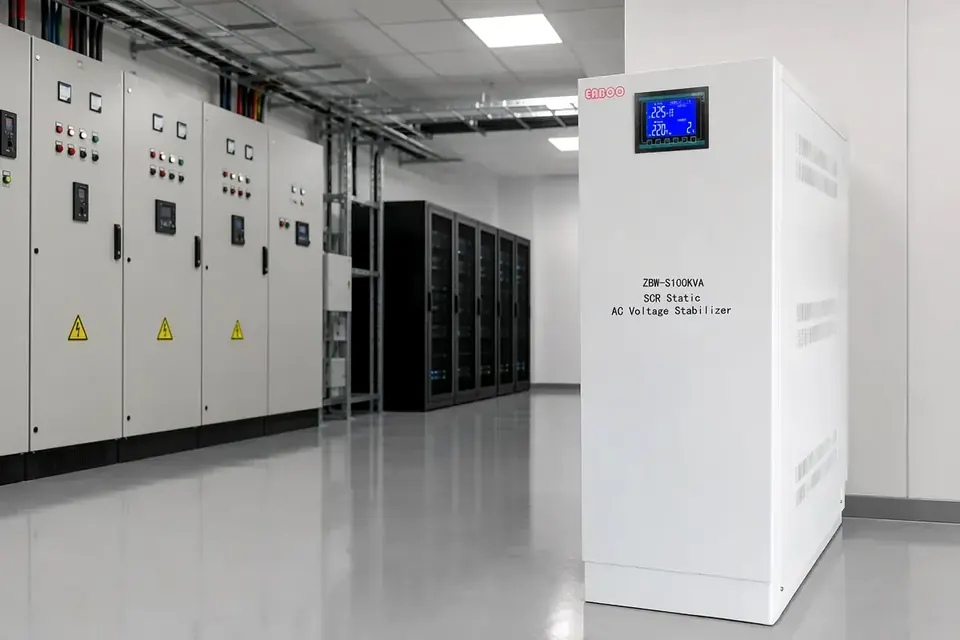
Three line voltages that disagree
A machining cell on a 400 V board reads 415, 398 and 386 V between phases. The CNC on the high phase trips twice a shift, the chiller on the low phase drops out at lunchtime, and the conveyor motor across all three runs 18 K hotter on one winding.
Unbalance is a ratio, not a spread
"The phases are 29 V apart" sizes nothing, because 29 V at 400 V is not 29 V at 208 V. What counts is deviation from the average: (415 + 398 + 386) / 3 = 399.7 V, largest deviation 15.3 V, so unbalance is 3.8 %.
Motors react to that figure, not the spread. An unbalanced supply is two rotating fields; the backward one meets the rotor at almost twice line frequency, where skin effect raises bar resistance. Negative-sequence rotor current runs six to ten times the unbalance percentage, so 3.8 % becomes a quarter to a third of rated current, and the heat lands in the bars and end rings that fail first. Derating tables follow the same curve: 1 % capacity at 1 % unbalance, 5 % at 2 %, 12 % at 3 %.
Unequal single-phase load also shifts the neutral, so line voltages look normal while phase-to-neutral volts and the phase angle are already wrong: 401 V line-to-line reaches a control circuit as 214 V.
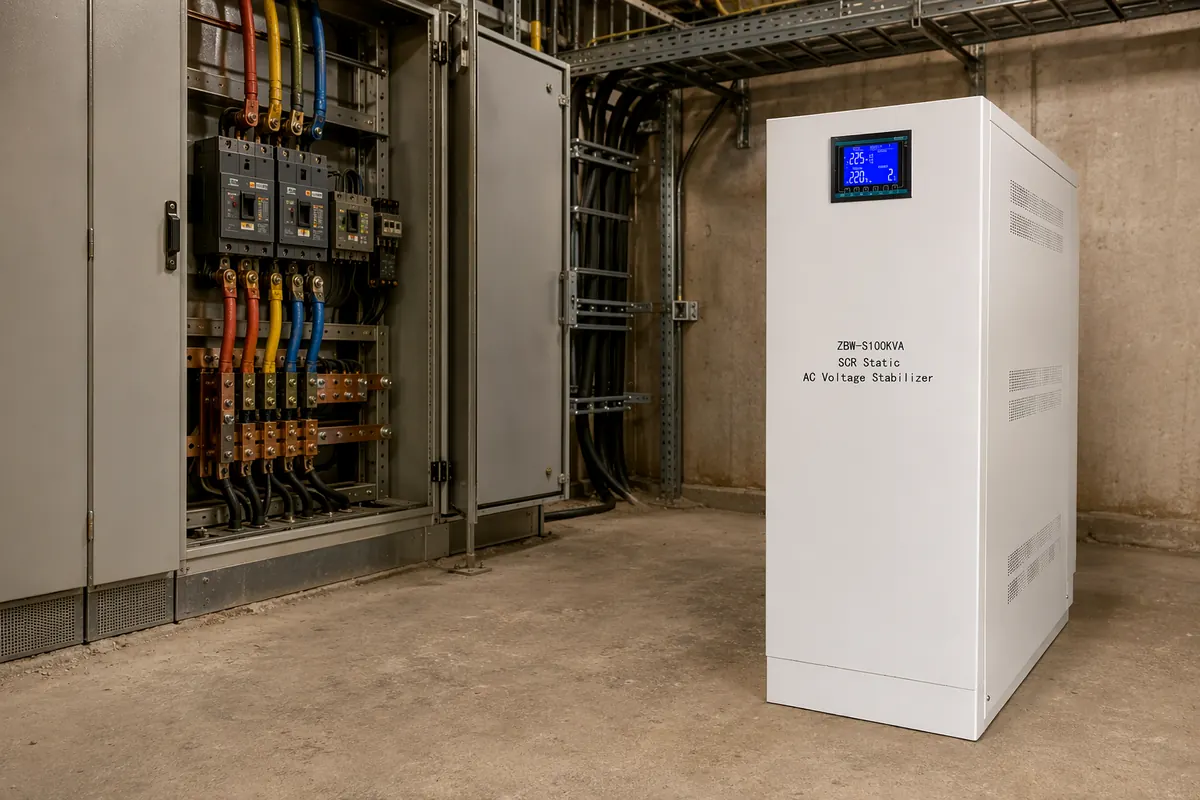
Three readings that decide the fix
At the main breaker, plant near idle. Two percent with nothing running means the source is upstream: a single-phase spur on the same transformer, a tap setting.
The same point at the busiest hour. Growth from 0.5 % to 3.8 % under load means the cause is your own distribution.
Winding temperature on the largest load. The 18 K difference matches the 3.8 % and shows the insulation margin left.
Below 1 % leave it; 1 to 2 % log it; 2 to 3 % schedule work; above 3 % treat it as a fault; above 5 % stop standard motors until rebalanced.
Three fixes, in cost order
Move single-phase circuits. Log every outgoing circuit over a production day, then shift the largest single-phase loads off the heaviest phase. Labour only, and the one fix that reduces the motor's negative-sequence current.
Regulate each phase. Independent per-phase loops hold 380 V on each phase when the incoming phases differ. The ZBW-S static series does that with SCR switching: input AC 304-456 V, output 380 V, accuracy ±(1-3) % settable, 10 KVA to 3500 KVA. Size each phase on its own current, never on total kVA divided by three. The SBW servo series covers 50 KVA to 800 KVA at ±3 % for whole-line protection.
Change the transformer. A delta-wye SG three-phase isolation transformer builds a new neutral and blocks zero-sequence current from travelling upstream; the OSG autotransformer converts voltage only. Neither rebalances anything upstream.
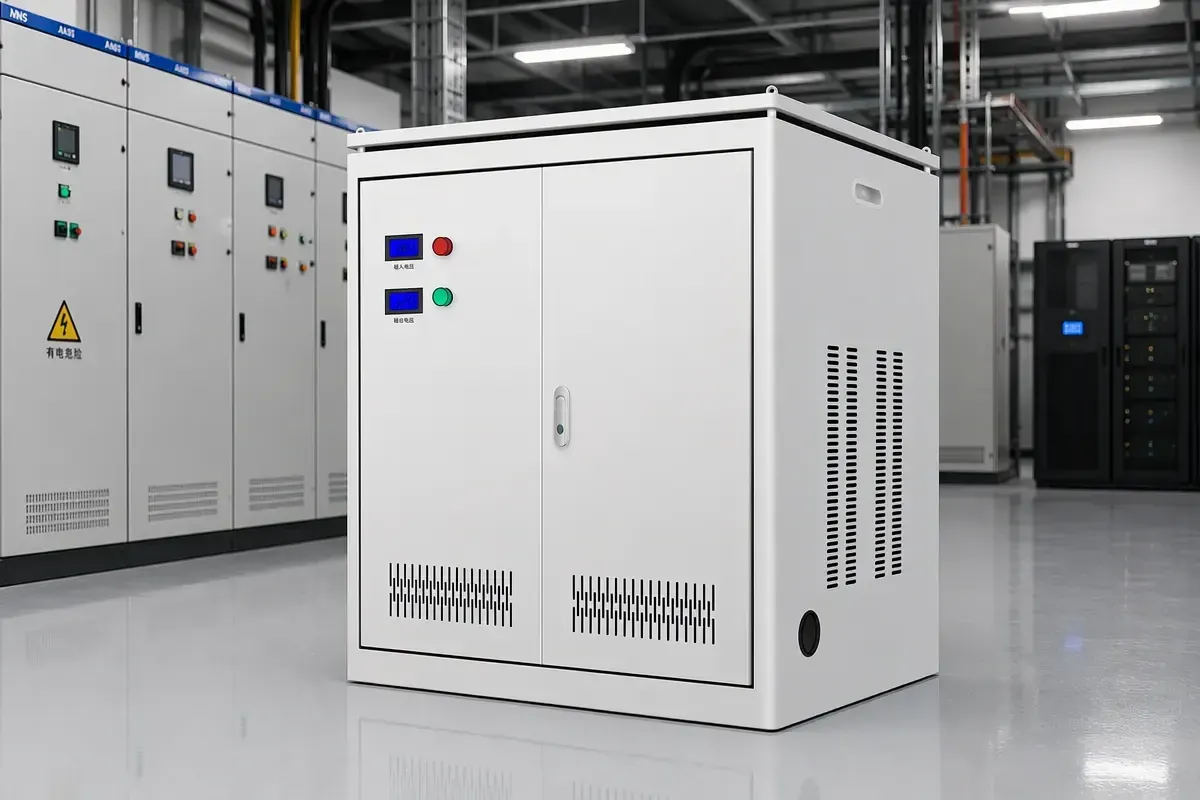
Where this stops working
A per-phase regulator can hold 380 V on every phase and still leave the motor hot: it controls magnitude, not phase angle, so negative-sequence current from a shifted neutral stays. Where the unbalance is angular, only part of the temperature comes down.
It cannot create capacity either: a 100 KVA unit carries about 152 A per phase, so a phase drawing 160 A limits the cabinet. Independent loops suit motors but not anything that synchronises or parallels, and a start transient should not size the cabinet.
When the source is a single-phase spur on a shared transformer, the fix belongs to the utility or to another feeder; regulation on your side only keeps that problem invisible. For overlapping cases see general industrial and commercial distribution, and for faults a single-phase unit cannot reach, three-phase faults a single-phase stabilizer cannot fix.
Conclusion
Measure unbalance as deviation from average, near idle and at the busiest hour. Under 2 %, move circuits; between 2 % and 5 %, per-phase regulation buys time while the motor keeps some heat; above 5 %, stop standard motors and fix the distribution.
Technology · Three-phase · Industrial